

Shared Equipment
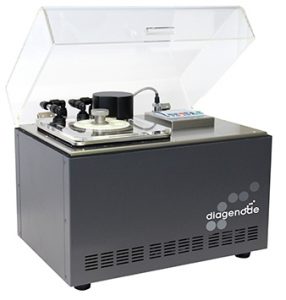 Bioruptor Pico Sonicator (Diagenode)
- DNA shearing for Next-Generation-Sequencing (5 – 100 µl)
- Chromatin shearing (10 µl – 2 ml)
- RNA shearing
- Protein extraction from tissues and cells
- FFPE DNA extraction
- Protein aggregation studies
Location: W420S.1 (4th floor equipment room)
Contact: Dr. Hee-Sook Kim (heesook@rutgers.edu)
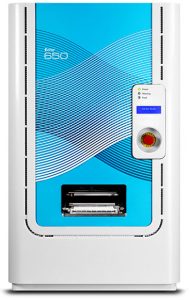 Echo 650 Acoustic Liquid Handler (Beckman Coulter)
- Accurate, precise, contact-free acoustic transfer in volumes as low as 2.5 nL
- Transfer from 96-well to 1536-well microplates
- Enables assay miniaturization in a broad range of applications
For more details, visit: www.beckman.com
Location: RBL/2200
Contact: Dr. Pradeep Kumar (kumarp3@njms.rutgers.edu)
 Download Rutgers PHRI – Shared Equipment
Agilent Seahorse XFp Analyzer: Analyzer for immunometabolic studies measuring OCR and ECAR of live cells.
Agilent TapeStation: Automated electrophoresis solution for the sample quality control of DNA and RNA samples. The system integrates an instrument, data-processing software, reagents, and Screen Tape devices specific to DNA and RNA. It is used to analyze the size, quantity, and integrity of various types of DNA/RNA samples and supports next-generation sequencing (NGS) workflows with low to high throughput, delivering highly precise analytical evaluation.
Agilent/Biotek BioSpa 8 automated incubator: The system links Agilent BioTek readers and imagers together with washers and dispensers. This integration provides a full workflow automation of up to 8 microplates or other labware. The BioSpa 8 can automate your workflows, from ELISA assays to long-term live-cell assays. Temperature, CO2/O2 control, humidity monitoring, and lid handling ensure an ideal environment for cell cultures. BioSpa software records session timelines and environmental conditions and sends text and email alerts during long and short-term runs. Link a washer, dispenser, plate reader, or imager for complete workflow automation.
Agilent/Biotek Cytation 3, Cytation 5, and Synergy HTX Cell Imaging Multi-Mode Readers: These instruments provide a wide-ranging capability that combines automated digital upright and inverted widefield microscopy with conventional multi-mode microplate reading, including absorbance, luminescence, and fluorescence readouts. The inverted microscopy module provides sample visualization from 1.25x to 60x magnification in fluorescence, brightfield, and color brightfield for a broad range of applications. The upright microscopy module with reflected-light imaging enables even more applications, such as ELISpot assays, fast slide scanning, and ROI detection workflows.
Agilent/BioTek MultiFlo FX Multimode Dispenser: Automated multimode reagent dispenser for 6- to 1536-well microplates. The system incorporates several unique technologies in its modular design, including Parallel Dispense, random-access dispense (RAD), and proprietary Automated Media Exchange (AMX) modules. The technologies in the MultiFlo FX multimode microplate dispenser enable many liquid handling applications from 2D and 3D cell culture to concentration normalization assays, ELISA, bead-based assays and more. A fully configured MultiFlo FX replaces up to five liquid handlers, saving space, time, and instrumentation budgets.
BioRad GenePulser: Modular electroporation system for transfecting primary cells, bacteria, and difficult-to-transfect cells
Cepheid GeneXpert: Closed cartridge PCR-based diagnostic platform for multiple pathogens with accuracy, flexibility, and increased scalability as needed.
Chromium iX controller for scRNA-Seq: The system offers comprehensive, scalable solutions for measuring gene expression in single-cell and nuclear suspensions fixed with formaldehyde. It has several advantages over unfixed cells: i) sample fixation locks in cell states and preserves fragile samples; ii) enables longitudinal studies; iii) enables transport of the controller to various study sites for processing; iv) minimizes batch variability.
EVOS Microscope: Manual microscope capable of up to 2-color fluorescence for cell culture and histology.
FastPrep-24: The system simultaneously homogenizes up to 24 samples in 40 seconds, with interchangeable adapters for versatility in sample numbers, sizes, and temperature conditions.
GloMax® Navigator System: Microplate reader for detecting luminescence at high sensitivity. Reporter assays (e.g., luciferase), Cell viability and cytotoxicity assays (e.g., ATP, autoluminescent reporter strains), and High-throughput screening for drug discovery or host-pathogen interaction studies.
Hamilton Microlab STARlet. Flexible, automated liquid handling system that features a modular design, the patented CO-RE technology for secure tip attachment, and dual liquid level detection. Key features of the Rutgers setup include an 8-channel pipetting head, various gripping devices, and an Autoloader for sample tracking. It is housed in a custom-made biosafety cabinet for bacterial work and equipped with a 16-slot Liconic incubator and a Biotek plate reader, enabling automated workflows. It is controlled by VENUS software, making it suitable for applications such as bacterial culturing, automated kill curves, automated MICs, and growth monitoring, as well as hands-free sample dispensing for consistent, rapid workflows.
Interscience easySpiral Dilute Automatic dilutor and plater for bacterial CFU plating and enumeration: Automatic diluter and plater of Petri dishes. It allows 1/10th serial dilutions and plating up to 6 logs. dilution in one single Petri dish. For a sample of 30 to 1 x 10¹² bacteria, without manual dilution and plating, is automatic.
Keyence BZ-X810 all-in-one fluorescence microscope: The system includes a high-intensity 40 W LED fluorescent light source, a cooled CCD monochrome camera, a motorized XY and Z stage, Chroma Technology DAPI/EGFP/TRITC/CY5 filters, and Plan Apochromat 10x/60x oil objectives.
Leica SP8 confocal system with a DMi8 inverted microscope: The system includes a motorized stage, 10x /20x /40x/ 40x oil/ 63x oil objectives, 405/488/552/638 nm laser lines, 5 spectrally tunable detector channels, and a HyD Hybrid Detector.
Licor Odyssey M imager: Multimodal system with features including multiplex fluorescence and chemiluminescence imaging, onboard integration of multiple channels, and a high-resolution sCMOS sensor. It supports a wide range of applications, including Western blots, gel- and plate-based assays, and In-Cell Westerns. The imager provides a high dynamic range and is compatible with various sample types, including slides, membranes, and multi-well plates.
Millipore Sigma CellASIC ONIX2 Microfluidic System: Automated platform for precise manipulation of multiple key cell culture parameters, enabling measurement of cellular responses to pre-programmed media, temperature, and gas environment changes. It provides detailed information on live cell processes, with ultra-high-quality images and complete environmental control. The system uses high-quality, optically clear microfluidic plates and intuitive software, and integrates with a broad range of inverted microscopes to enable continuous, high-magnification observation of live cells as they respond to their environment in real time.
MSD plate reader: MSD (Meso Scale Discovery) uses electrochemiluminescence (ECL) for detection. An ECL system such as the MSD platform offers many advantages: higher sensitivity, a wider dynamic range, multiplexing, fewer samples required, and higher efficiency.
nCounter® Analysis Systems: The system provides a robust method for multiplexing up to 800 gene expression targets using direct detection technology. The simple, efficient workflow requires just 15 minutes of hands-on time for most panels using an automated benchtop processing system and produces highly reproducible data, requiring no amplification or technical replicates in less than 24 hours.
Nikon C2+ confocal microscope: Versatile and high-performance system for imaging, featuring simultaneous 3-channel fluorescent and DIC acquisition, high-speed scanning up to 100 fps, and optional 32-channel spectral detection for advanced analysis. It offers both confocal and widefield modes. Key features include high-efficiency detectors, Nikon’s high-quality optics, and the NIS-Elements software for acquisition and analysis.
Opentrons® OT-2: High-precision, open-source liquid handler, easy to use and flexible enough to automate many application workflows. This robot automates protocols and workflows in genomics, proteomics, cell-based assays, and drug discovery.
Pioreactor bioreactors: Open-source and modular bioreactors built on the Raspberry Pi platform. Designed for small-scale experiments, they offer accessible, customizable options for studying microorganisms such as yeast and bacteria.
QIAcuity Digital PCR System: Fully automated, integrated platform that combines partitioning, thermocycling, and imaging into a single, “walk-away” unit. Key features include high-throughput capabilities, advanced multiplexing (up to 12-plex), scalable designs (1, 4, or 8-plate configurations), and fast results (as quick as 2 hours). It employs a nanoplate-based principle for sample partitioning and fluorescence for absolute quantification.
Sciex 4000 QTRAP Mass Spectrometer: The system is routinely used for sensitive drug metabolism and PK studies in cultures and mouse serum.
Tecan Infinite M-Plex: Multimode plate reader for standard absorbance, fluorescence, and luminescence assays, featuring monochromator-based optics for free wavelength choice from 230 to 1000 nm in 1 nm increments. Key features include support for various luminescence types (glow, flash, dual-color), compatibility with plate formats from 6 to 384-well, and the ability to perform wavelength scanning and multiplexing.
ThermoFisher Multidrop Combi nL Reagent Dispenser: Advanced reagent dispensers designed for high-throughput laboratories. Offering precise, flexible dispensing for a wide range of applications and ensuring accuracy and reliability for enhanced workflow efficiency. The system is a highly reliable, easy-to-use solution for low-volume reagent dispensing. It offers precise dispensing, ensuring high-quality assay data and improved laboratory efficiency.
Typhoon 9400 Mode Imager: Multimode scanner is a versatile biomolecular imager with features for fluorescence, colorimetric, and radiolabeled detection, high-resolution imaging up to 10 µm, and a large 40 x 46 cm scanning area for high throughput. Its multimode capability is supported by five different laser options and automatic filter recognition for up to eight filters, with user-configurable slots for custom filters. Key features include a wide dynamic range, advanced photomultiplier tubes for sensitivity, and software for experiment setup and analysis.
Download Rutgers PHRI – Shared Equipment
10X Genomics Chromium controller: System for single-cell RNA-seq from Mtb-infected samples.
Agilent Seahorse XFp Analyzer: Analyzer for immunometabolic studies measuring OCR and ECAR of live cells.
BacTec MGIT 320 and 960: Both instruments use an automated mycobacterial detection system, a fully automated solution for mycobacterial liquid culture and susceptibility testing.
BD BACTEC MGIT 960 automated mycobacterial detection system: Fully automated system solution for mycobacterial liquid culture and susceptibility testing.
BD FACSymphony S6 Cell Sorter: The system brings cell sorting in line with the capabilities of modern flow cytometry. Populations identified with 20 or more colors in the complex hierarchies required for any application can be sorted. When coupled with the broad portfolio of BD high-parameter reagents, bioinformatics analysis tools, single-cell multiomics solutions, and application support capabilities, the system provides a complete, end-to-end solution for high-parameter experimental success. It enables the sorting of ultra-specific populations by using configurations up to 50 parameters to define populations deep in hierarchy and sort up to six of them at one time so that we can get more information from each cell and more value from each experiment, whether it is isolating the population of interest prior to our downstream assay or linking deeper phenotypic information with our functional or genomic read-outs.
BioRad GenePulser: Modular electroporation system for transfecting primary cells, bacteria, and difficult-to-transfect cells
Cepheid GeneXpert: Closed cartridge PCR-based diagnostic platform for multiple pathogens with accuracy, flexibility, and increased scalability as needed.
Cytation 7 Cell Imaging Multi-Mode Reader: The instrument combines automated digital upright and inverted widefield microscopy with conventional multi-mode microplate reading. The inverted microscopy module provides sample visualization from 1.25x to 60x magnification in fluorescence, brightfield, and color brightfield for a broad range of applications. The upright microscopy module with reflected-light imaging enables even more applications, such as ELISpot assays, fast slide scanning, and ROI detection workflows.
Cytation C10 confocal imaging reader: The system seamlessly integrates automated confocal and widefield imaging with multimode microplate reading. The proprietary confocal design ensures exceptional resolution and precise optical sectioning. Equipped with a Hamamatsu scientific CMOS camera, Olympus air- and water-immersion objectives, and laser-based illumination, it delivers top-quality images.
Eddy Jet 2W Automatic Spiral Plater for automated bacterial CFU plating: The spiral plating method enables automated, standardized sample plating and allows up to 3 dilution series on a single Petri dish.
Eppendorf Eporator: Fast and controlled electroporation of bacteria, yeasts, and other microorganisms with ease of data transfer using the USB port.
EVOS Microscope: Manual microscope capable of up to 2-color fluorescence for cell culture and histology.
FastPrep-24 and FastPrep-96: These platforms simultaneously homogenize up to 24 or 96 samples in 40 seconds, with interchangeable adapters for versatility in sample numbers, sizes, and temperature conditions.
GloMax® Discover System: Multimode microplate reader supporting luminescence, fluorescence, and absorbance detection. Reporter assays (e.g., luciferase, GFP), Cell viability and cytotoxicity assays (e.g., ATP, resazurin), Enzyme kinetics, and ELISA-based quantification. High-throughput screening for drug discovery or host-pathogen interaction studies.
Harvard Bioscience 4-Unit Whole-Body Plethysmograph: System for non-invasive respiratory function measurement in conscious, unrestrained small animals (for mice and rats). Lung function assessment: tidal volume, respiratory rate, enhanced pause (Penh).
Leica Cryostat: This instrument seamlessly combines efficiency and organization, enabling cryosectioning of infected tissue. The instrument’s CryoZone system ensures uniform cooling, while LED illumination enhances specimen visibility. The Cryostat’s CE blade holder and ergonomic design assure reproducible section quality, and the CryoZone system maintains optimal temperatures.
Luminometer GloMax 20/20: The system combines instrumentation and software in a complete solution that includes bioluminescent assays, protocols, and support.
MateoFL Microscope (Leica Microsystems): Versatile upright microscope equipped for brightfield, fluorescence, and phase-contrast imaging with objectives at 10x, 20x, 40x, and 100x (no phase contrast only for 100x).
MOLECUBES CT imager: The X-CUBE is a high-throughput preclinical CT imager enabling in vivo tissue quantification. The X-CUBE allows for fast whole-body mouse and rat CT imaging at extremely low dose and excellent soft tissue contrast. It is lightweight thanks to a self-shielded imaging unit, making it a truly mobile in vivo scanner. CT imaging enables a wide range of noninvasive, longitudinal tissue-measurement applications. Intuitive, wireless software, combined with a small-animal multimodal bed, enables easy, modular multimodal imaging.
Optima Max Ultra XP Centrifuge: Fast, temperature-controlled, efficient separations from samples for downstream applications.
Scireq flexiVent system: This instrument measures lung function, which is widely regarded as the gold standard for in vivo respiratory mechanics measurements. The instrument captures crucial details about the mechanical properties of conducting airways, terminal airways, and parenchyma. The flexiVent achieves the highest sensitivity and reproducibility by precisely controlling experimental conditions.
ThermoScientific Orbitrap XL MALDI-Mass Spectrometer: Platform that allows PK/PD studies of drugs in infected tissues.
Whitley A35 Anaerobic workstation: Designed to maintain anaerobic conditions within a controlled and sustained workstation environment equipped with full arm sleeves to maintain atmospheric isolation.